The short answer
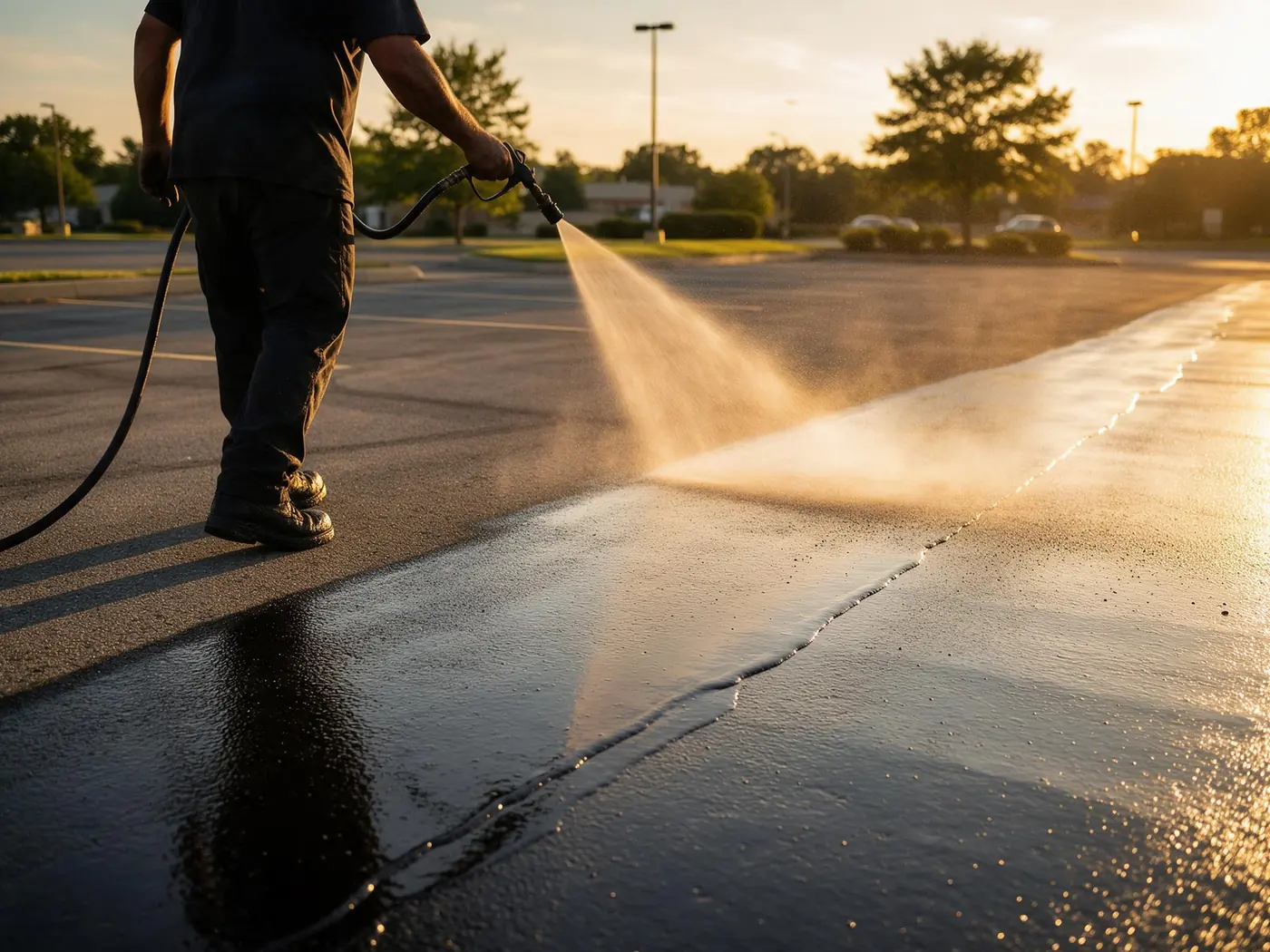
Most asphalt driveways and parking lots in Alabama need a fresh seal coat every two to three years. Busy commercial drive lanes can need it every one to two years, while a shaded driveway with light traffic can often go three or four. Seal when the surface shows wear, not by the calendar.
- Driveways: every 2 to 3 years, up to 4 with light use
- Commercial lots: every 2 to 3 years, entrances and drive lanes every 1 to 2
- New asphalt: let it cure first, at least 90 days and often six months to a year
- Weather: dry pavement, 50°F and rising, no rain for 24 hours
- Every time: fill the cracks before sealing
Why Alabama asphalt wears faster
Asphalt is crushed stone held together by a black, oily binder. A seal coat protects that binder. Three things in Alabama break it down faster than in milder places.
- Sun and heat. Ultraviolet light and long summers oxidize the binder. On a July afternoon dark pavement runs far hotter than the air above it. The binder dries out, the surface fades from black to gray and turns brittle.
- Rain. Most of Alabama gets more than 50 inches of rain a year, and the Gulf Coast around Mobile gets more than 60. Once the surface is worn, water runs through cracks into the base below and softens it. That is how small cracks turn into potholes.
- Freezing nights up north. Huntsville, Birmingham and the rest of North Alabama see more nights below freezing than the coast. Water trapped in a crack expands as it freezes and pries the crack open a little more each winter.
A seal coat slows all three. It blocks UV, sheds water and keeps gas and oil from softening the asphalt. It wears away doing that job, which is why it has to be renewed.
Signs your asphalt is ready
- The color has faded from deep black to gray or brown.
- You can see and feel individual stones, or small pieces come loose. This is called raveling.
- Hairline cracks are showing, especially along the edges and in the drive lanes.
- Oil and gas spots soak in instead of sitting on top.
- It fails the water test below.
The one minute water test
Pour a cup of water on a dry, sunny part of the pavement. If the water beads up and sits on top, the old seal coat is still working. If the surface darkens and the water soaks in within a minute or so, the seal is worn and the pavement is taking on water.
How often, by property
| Property | Typical interval | What drives it |
|---|---|---|
| Home driveway, normal use | Every 2 to 3 years | Sun, turning tires, oil drips |
| Shaded or rarely used driveway | Every 3 to 4 years | Less UV and traffic; watch for leaf stains and moss |
| Office, church or small business lot | Every 2 to 3 years | Steady traffic, open sun |
| Retail, restaurant or apartment lot | Every 2 years; drive lanes and entrances every 1 to 2 | Constant turning traffic, delivery trucks, fuel and grease |
| HOA streets and shared drives | About every 3 years, crack filling in between | Long runs of pavement, planned budgets |
These are starting points. Two lots on the same street can wear at different rates because of shade, drainage and the way cars move through them. That is why we look at the pavement before recommending a schedule.
Can you seal too often?
Yes. Every coat of sealer adds a thin layer. Sealing pavement that is still well protected stacks those layers up in places that see little traffic, like the parking stalls along a curb. Thick buildup can crack and peel on its own, and that looks worse than the original wear.
The rule is simple: seal when the surface shows wear. On commercial lots it often makes sense to seal the heavy drive lanes more often than the stalls. A good contractor will tell you when your pavement does not need sealing yet.
The best time of year in Alabama
Sealer needs warmth and dry weather to cure. Most manufacturers call for air and pavement temperatures of at least 50°F and rising, and no rain for at least 24 hours after it goes down. In practice:
- Spring and fall are ideal across the state: warm days, lower humidity and steadier weather.
- Summer works well with early starts. On very hot afternoons sealer can dry too fast, so crews start in the morning and may lightly mist hot pavement first.
- Winter is hit or miss. South Alabama gets warm, dry spells that work; North Alabama usually waits for spring.
Humidity does not stop a job, but it slows curing. On muggy days plan to keep cars off a little longer.
Sealing new asphalt
Fresh asphalt keeps giving off oils while it cures. Seal it too early and you trap them, which can leave the surface soft. Many sealer makers ask for at least 90 days; in Alabama heat, many contractors prefer to wait six months to a year. The first coat should then go on before the surface has had time to fade and crack.
Sealing is one part of the job
A seal coat protects pavement. It does not repair it. For the coat to do its job:
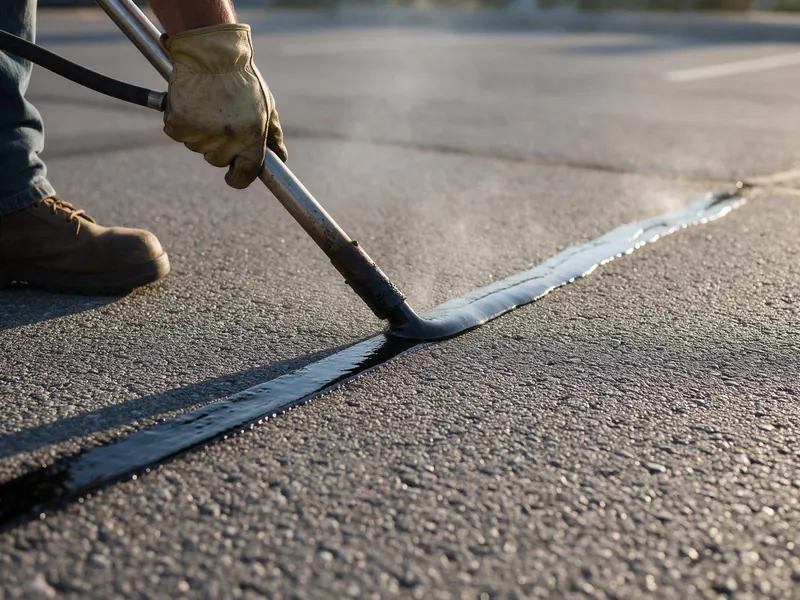
- Fill cracks first. Cracks wider than about a quarter inch get hot pour rubberized filler. Sealer alone will not bridge them.
- Patch potholes and failed spots. Sealer over a failing base fails with it.
- Clean the surface and treat oil spots so the sealer bonds.
- Restripe after sealing so stalls, arrows and accessible spaces are crisp. See ADA parking lot striping basics.
If cracks cover large areas or the base is giving way, sealing is no longer enough. Our guide to seal coating vs resurfacing explains how to tell.
Around the state
- Tuscaloosa and Birmingham: hot, humid summers and heavy spring storms. Most driveways fall in the two to three year range; busy commercial lots on main roads often need their drive lanes sooner.
- Huntsville and North Alabama: more freeze and thaw than the rest of the state, so filling cracks before winter matters as much as the seal itself.
- Mobile and the Gulf Coast: the most rain and the strongest sun. Water is the main enemy, so keep the surface sealed, the cracks closed and the drains clear.
More guides
Seal coating vs resurfacing
Surface problem or base problem? How to tell whether your pavement needs a seal coat, an overlay or a rebuild.
Read the guide →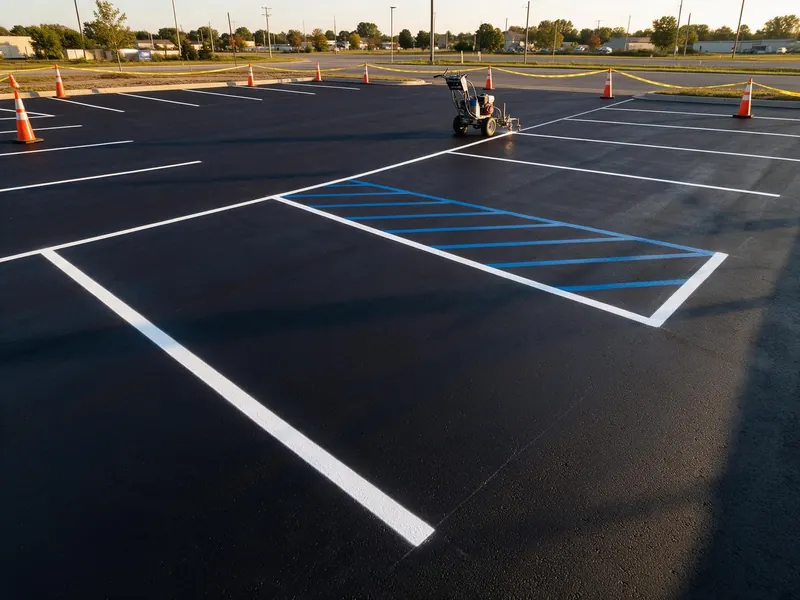
ADA parking lot striping basics
How many accessible spaces you need, how wide they are, aisles, signs and what Florida adds on top of the federal rules.
Read the guide →