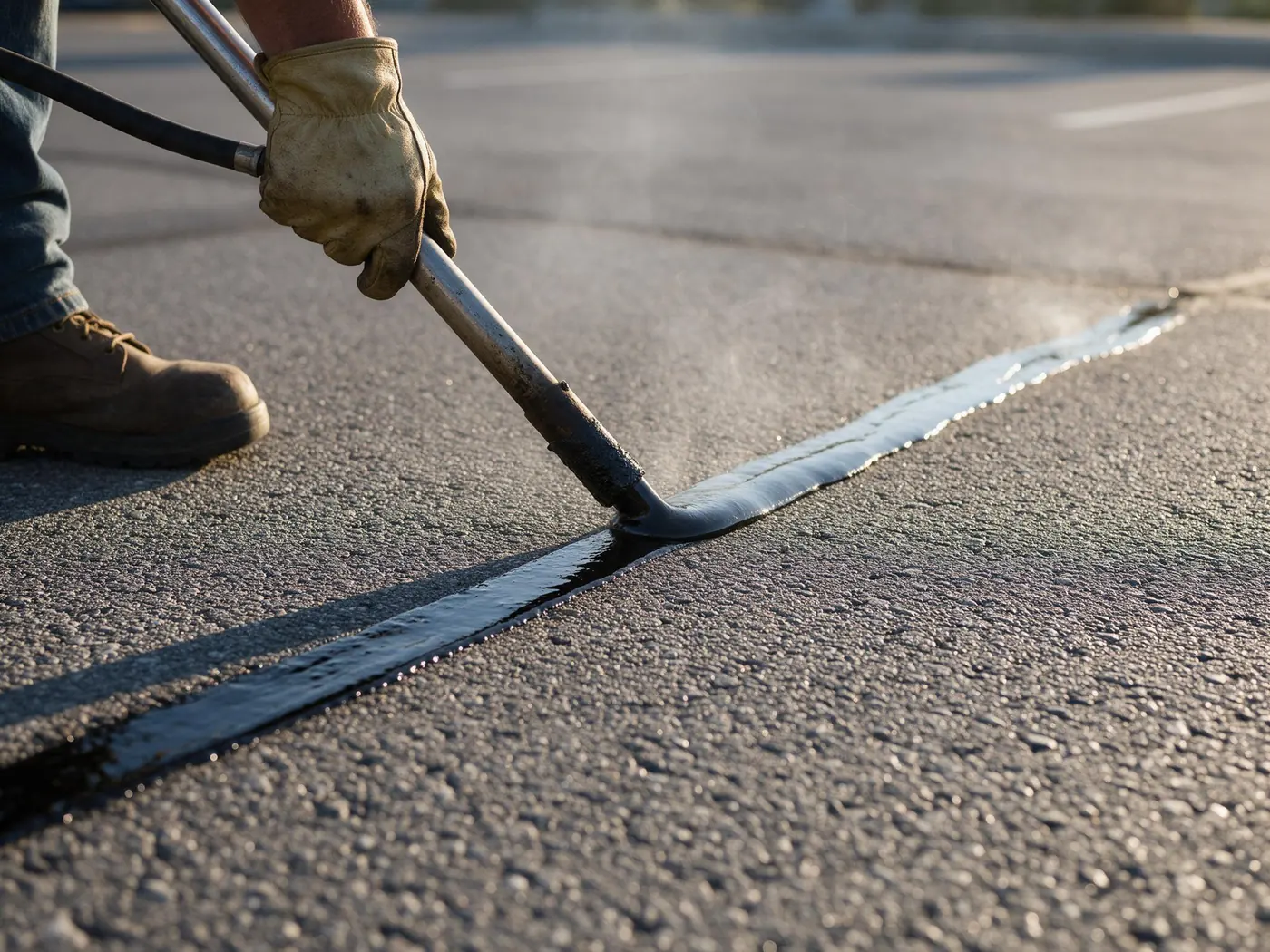
The short answer
Seal coating is maintenance for pavement that is still sound: a thin protective coat that blocks sun, water and oil. Resurfacing, also called an overlay, is a new layer of asphalt, usually about 1.5 to 2 inches thick, laid over a worn surface when the top has failed but the base is still good. If the base itself has failed, neither will last and that area needs full depth repair.
- Seal coat when: the surface is faded or rough but solid, with cracks you can fill
- Resurface when: cracks, raveling and patches cover a large share of the surface
- Rebuild when: the pavement is soft, sinking or broken into small blocks
Side by side
| Seal coating | Resurfacing (overlay) | Full depth repair | |
|---|---|---|---|
| What it is | A liquid protective coat over existing asphalt | New hot mix asphalt over the old surface, often after milling | Failed pavement and base removed and rebuilt |
| Adds strength | No | Some, at the surface | Yes, from the ground up |
| Fixes | Fading, oxidation, water getting in, light surface wear | Widespread cracking, raveling, a rough or uneven surface | Base failure, soft spots, sinking |
| Typical life | 2 to 3 years, then reapplied | Often 10 to 15 years with upkeep | 20 years or more with upkeep |
| Relative cost | Lowest | Many times the cost of sealing | Highest |
| Disruption | Usually one day, then 24 to 48 hours to cure | Milling and paving crews for one or more days | Longest; sections closed while they are rebuilt |
Surface problem or base problem?
Every decision comes back to this. The surface is the layer you see. The base is the compacted stone underneath that carries the weight. Sealing and resurfacing only work when the base is sound.
Surface problems: sealing and repair work
- Gray, faded color and a dry, rough texture
- Scattered cracks, mostly single lines, that can be filled
- Oil and gas stains
- A few potholes in otherwise solid pavement
Signs the problem goes deeper
- Alligator cracking: cracks that join into a pattern of small blocks, like reptile skin. It is the classic sign of a weak or wet base.
- Ruts and dips where the tires run, or water that stands for days after rain
- Soft spots that flex under a car, or patches that fail again within a season
- Edges breaking off along the sides of a driveway or lot
When seal coating is the right call
Seal coating makes sense while the pavement is still in one piece. If the cracks can be filled and the few bad spots patched, a seal coat protects everything around them and buys years before resurfacing. It is also the cheapest way to make a lot look new again: the surface goes back to an even, deep black and fresh striping goes down on top.
- The surface is faded, dry or slightly rough, but firm
- Cracks are scattered and narrow enough to fill
- Damage is limited to spots that can be patched
- Water drains off instead of standing
When it is time to resurface
An overlay makes sense when repairs would cover too much of the surface to be worth it. A common rule of thumb: once cracks, raveling and patches cover more than about a quarter to a third of the area, a new surface layer is usually the better value.
The base has to be checked first. New asphalt laid over a failing base copies the old cracks up into the new layer within a few seasons; paving crews call this reflective cracking. Failed spots are cut out and rebuilt before the overlay goes down.
- Cracking across large areas, not just a few lines
- So much surface lost that loose stones are everywhere
- Many patches, with new failures between them
- A surface uneven enough to hold water or trip people
The middle path most lots take
Many lots that look rough are not ready for an overlay. They need targeted repair first: cut out and patch the failed spots, fill every crack, then seal the whole surface and restripe. That costs a fraction of resurfacing and can add years of life. Done on schedule, it is also what pushes back the day an overlay is needed. See how often to seal coat in Alabama.
If you do resurface
New asphalt needs time to cure before its first seal coat: at least 90 days and often six months to a year. After that the same cycle starts again. Fill cracks as they appear and seal every two to three years to protect the money you just spent.
A five minute self check
- Walk the whole surface after a rain, or with a hose on a dry day, and note where water stands.
- Look at the crack pattern. Single lines can be filled. Connected blocks point to the base.
- Watch the cracked areas while a car drives over. Movement means the base is involved.
- Count the patches and estimate how much of the surface they and the cracks cover.
- Take photos and send them with your quote request, or have us look in person.
We do seal coating, crack filling, pothole repair and striping. If your pavement is past the point where sealing helps, we will tell you so.
More guides
How often to seal coat in Alabama
Every two to three years for most pavement, sooner on busy drive lanes. The signs, the water test and the best season.
Read the guide →
ADA parking lot striping basics
How many accessible spaces you need, how wide they are, aisles, signs and what Florida adds on top of the federal rules.
Read the guide →